
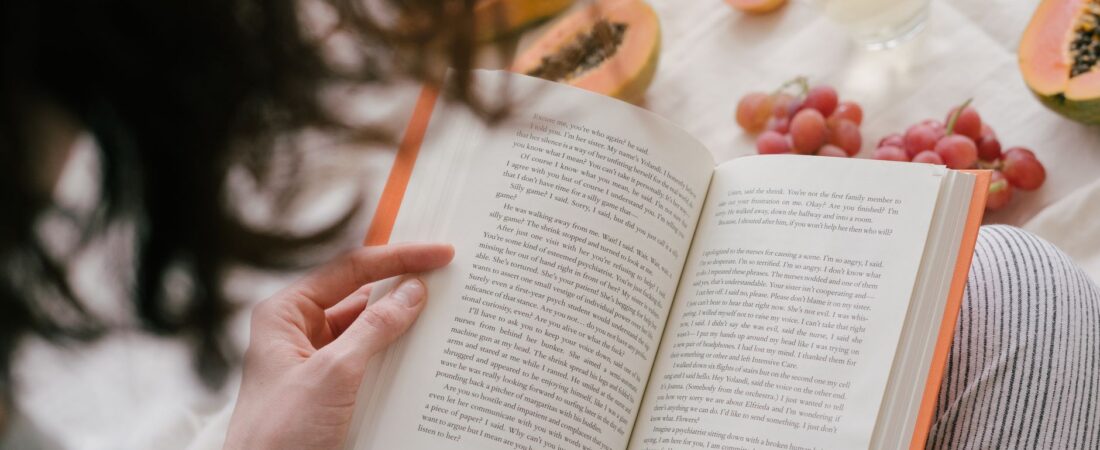
The easiest way to read more books is to swap small pockets of scrolling time for reading time, rather than trying to carve out extra hours you don’t have. If you’ve searched how to read more books, chances are you’re not short on interest, you’re short on the habit of reaching for a book instead of your phone. The good news is that reading doesn’t need a dedicated hour of quiet time to count. Ten minutes on the couch, on the train, or in bed before the light goes off all adds up.
This isn’t about hitting a number of books a year or joining a challenge that makes you feel behind by February. It’s about making reading the thing you reach for on autopilot, the way your phone currently is.
Why book reading feels harder than it used to
It’s not that you’ve lost the ability to focus for long stretches, it’s that your evenings are full of things designed to be easier to pick up than a book. A phone lights up, gives you something new every few seconds, and asks nothing of you. A book asks you to sit with one thing for a while. When you’re tired after work, commuting, or wrangling dinner, the phone wins by default, not because you’re less capable of reading than you used to be.
There’s genuinely good research behind why this matters beyond enjoyment. Researchers at the University of Sussex found that reading for around six minutes can lower tension more than taking a walk or having a cup of tea. Part of that seems to be the focus itself. Following one story or one idea gives your attention somewhere to settle, which is the opposite of what a fast-scrolling feed does. If you’ve noticed your evenings feel wired even though you’re exhausted, that constant stream of content might be part of the problem, something we’ve gone into more in is doomscrolling bad for you.
None of this means you’ve been doing evenings wrong. It just means the environment is stacked against reading a little, and it helps to know that going in.
How to read more books without forcing it
The habit sticks better when it’s low pressure than when it’s a discipline project. A few things that actually work:
Put a book where your phone usually lives. On the nightstand, in your bag, on the arm of the couch. You’ll pick up whatever’s closest when you’ve got a spare minute, so make the book the closest thing.
Commit to one page, not a chapter. Chapters feel like a task. One page feels like nothing, and most nights you’ll keep going once you’ve started. If you don’t, one page still counts.
Swap one specific scroll moment. Not all of them, just one. Maybe it’s the ten minutes waiting for the kettle, or the bit before you fall asleep. Pick a single trigger and put a book there instead.
Try audiobooks for the in-between bits. Folding washing, walking the dog, driving. It still counts as reading a book, and it doesn’t ask for your eyes or a quiet room.
Let yourself quit books you’re not enjoying. There’s no rule that says you have to finish something. A book you’re forcing through is more tiring than your phone, and it’ll push you back towards the scroll.
Make reading the path of least resistance
The trick isn’t willpower, it’s friction. Make reading slightly easier to reach for than your phone and slightly less effort than deciding what to watch, and it starts winning more often on its own. If you’re figuring out what to actually pick up next, whether that’s a book, a podcast, or a whole new subject you’re curious about, it helps to sit with the question for a minute rather than grabbing whatever’s trending, something covered well in how to pick your next learning project.
It’s also worth remembering this isn’t only for people who already call themselves readers. Picking reading back up as an adult, after years of not really doing it, is completely normal and doesn’t need justifying, which is a big part of what we get into in learning a new skill as an adult.
A quieter way to spend your evenings
If reading is the start of wanting your screen time to actually build towards something, eaase’s Learn feature works a similar way. You pick a subject you’re curious about and it puts together a four-week path matched to how much energy you’ve actually got that night, a short listen when you’re wiped, a longer read when you’re not. No pressure, no algorithm, just your pace. It’ll be free to download if you want to pre-register.