
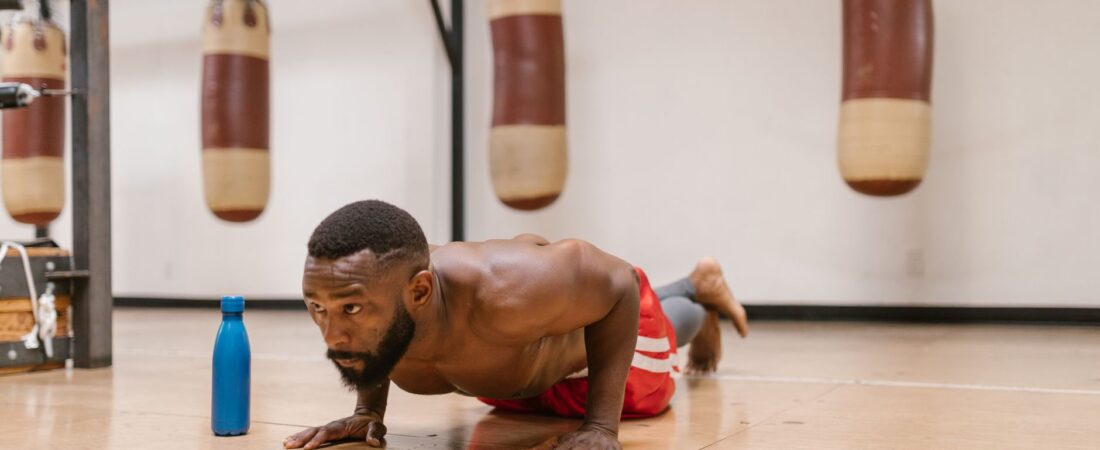
Bodyweight exercises for beginners are simple strength moves like squats, push-ups from the knees, glute bridges and planks that use your own body weight instead of equipment, making them easy to start in a living room with no gym membership or gear required.
If you’re skipping workouts because you’re too wiped out from scrolling at midnight, and skipping sleep because your body never feels tired enough to switch off, you’re stuck in a loop that a few minutes of movement can actually break. You don’t need a spare hour. Ten minutes in your living room tonight is a genuine start.
Why Movement and Sleep Work as a Loop
Exercise and sleep aren’t separate boxes to tick, they influence each other every single day. Moving your body, even gently, helps you wind down later because it uses up some of the restless energy that otherwise shows up as racing thoughts at night. The Sleep Foundation has noted that regular movement, even in short bursts, is linked to falling asleep faster and sleeping more soundly, which is worth reading if you want the detail.
The flip side is just as real. When sleep is rough, you wake up foggy, sore and short on motivation, so movement gets pushed to tomorrow again. That’s the movement and sleep loop worth breaking, not with an hour-long gym session, but with something small enough to actually happen tonight.
Bodyweight Exercises for Beginners You Can Try Tonight
You don’t need equipment, a mat is optional, and bare feet on carpet work fine. Pick three or four moves below, do them for a minute each, and you’ve got a full session before your show finishes buffering. The NHS has a decent rundown of beginner-friendly strength moves if you want extra form pointers.
- Squats: Stand with feet hip-width apart, lower as if sitting into a chair, then stand back up. Twelve to fifteen reps works your legs and glutes with zero gear.
- Push-ups from your knees: Hands under shoulders, knees on the ground, lower your chest towards the floor and push back up. Start with five or six.
- Glute bridges: Lie on your back, knees bent, feet flat, lift your hips up and squeeze, then lower slowly.
- Plank: Forearms and toes on the ground, body in a straight line, hold for twenty to thirty seconds.
- Wall sits: Back against a wall, knees bent to a right angle, hold like you’re sitting in an invisible chair.
- Standing marches: Lift your knees one at a time at a steady pace for thirty seconds, great for getting your heart rate up without jumping around the lounge room.
If the word workout makes you want to close the tab, that’s normal. Exercise for people who hate exercise doesn’t need to look like a gym class. These moves count just as much done in two short bursts as in one long session.
Making It a Habit Without the Pressure
Consistency matters more than intensity, and nobody is keeping score. Doing these moves twice this week beats planning an ambitious programme you abandon by Wednesday.
- Keep a towel or mat by the couch so there’s zero setup required.
- Do it before you sit down for the night, not after you’ve already settled in.
- Pair it with something you already do, like during ad breaks or a podcast.
- Stop before you’re wrecked. A few good reps beats pushing into discomfort.
Stretching before bed can be a gentle way to close out the session and help your body shift into wind-down mode. If you’d rather have the moves mapped out for your actual week instead of guessing, a fitness planner app for beginners can build something around the time and space you’ve genuinely got.
eaase’s Move feature builds a short plan around the time, space and energy you’ve actually got, and the Sleep coach can nudge you to wind down afterwards so the loop keeps running in your favour, not against it. It’ll be free to download if you want to pre-register.